
Water Golden blu Silent Wefts from the Deep Blue: A Material Dialogue Between Aquatic Ephemerality and Textile Persistence
The exhibition Water Golden blu Silent Wefts from the Deep Blue is conceived as a conceptual and material exploration that transcends the mere figurative representation of the aquatic world. Through the sensitive lens of fiber art, the exhibition establishes an unprecedented dialogue between the ethereal and transient fluidity of marine life and the tangible persistence of fishing nets, elevating the latter from functional tools to vehicles of poetic meaning and ecological reflection.
The title itself, "De Piscibus," with its learned echo and its intrinsic connection to Aristotle's treatise on the nature of fish, suggests an investigation rooted in the history of knowledge and observation of the natural world. However, the addition of the subtitle "Silent Wefts from the Deep Blue" immediately introduces the specificity of the artistic language adopted: that of fiber, knot, and weave, capable of evoking, through their very structure, the complexity and fragility of marine ecosystems.
The initial evocation of the "hushed realm of the waters" is not simply descriptive, but establishes a contemplative register that invites the viewer to attune themselves to the apparent stillness of an underwater world often perceived as distant and inaccessible. Fish, far from being mere objects of study or resources, emerge as "creatures that dance in aquatic symphonies," underscoring their intrinsic beauty and the dynamism of their movements. The exhibition, therefore, refrains from a purely scientific vision to embrace an aesthetic and emotional perspective.
The conceptual heart of the exhibition lies in the transmutation of the net from a tool of capture to a symbol of connection and, paradoxically, of vulnerability. The fiber art works that reinterpret nets do not limit themselves to imitating their form, but explore their expressive potential through the variation of materials, textures, and chromatics. Each knot, each weave becomes a metaphor for the complex relationships that bind marine species to their environment and, in a broader sense, humanity to nature. The choice of fiber art is not accidental: its intrinsic manual quality, the slow time of weaving, contrast with the speed and often brutality of industrial fishing practices, suggesting a more thoughtful and respectful approach towards the marine world.
The variety of forms, colors, and behaviors of fish, evoked in the text, finds a visual resonance in the exhibited works. The artists, through the manipulation of fibers, seek to capture not only the external appearance but also the dynamic essence and vital "iridescence" of these creatures. Iridescent scales can be suggested by shimmering threads, the fluidity of movement by sinuous and light forms, the "lightness of their postures" by aerial suspensions and installations that play with transparency and light.
The exhibition, however, does not evade the crucial issue of the fragility of marine ecosystems and the importance of their preservation. The nets, in their new artistic guise, can also evoke the danger of excessive exploitation of fish resources and the devastating impact of pollution. In this sense, art becomes a tool for raising awareness, inviting the viewer to reflect on their own responsibility towards an environment as fascinating as it is threatened.
The conclusion of the text emphasizes how "De Piscibus: Silent Wefts from the Deep Blue" transcends simple aesthetic contemplation to become a "vibrant bridge" between our world and the submerged one. The exhibition does not limit itself to showing beauty but urges a "collective responsibility" towards the "astonishing wonder" that pulsates in the deep sea. Ultimately, the exhibition is configured as an invitation to listen to a "silent language," that of nature, translated into a material dialogue that speaks directly to our sensibility and our conscience. Fiber art, with its ability to transform humble materials into evocative works, proves to be a surprisingly effective means of giving voice to this silent poetry, weaving wefts of awareness and respect for the deep blue.
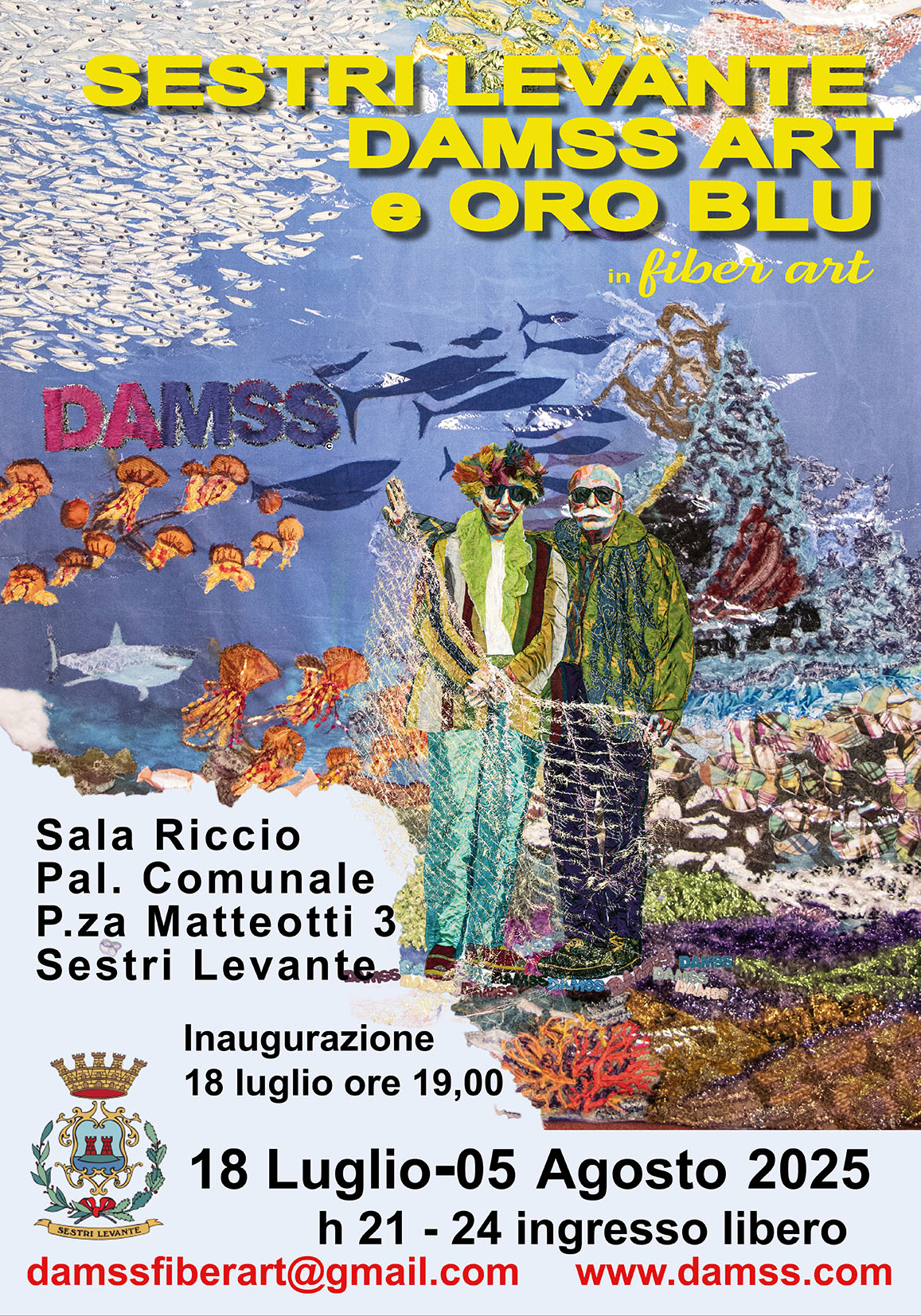
Sala Riccio Comune
Sala Riccio piazza Matteotti
Sestri Levante Genua
Italy