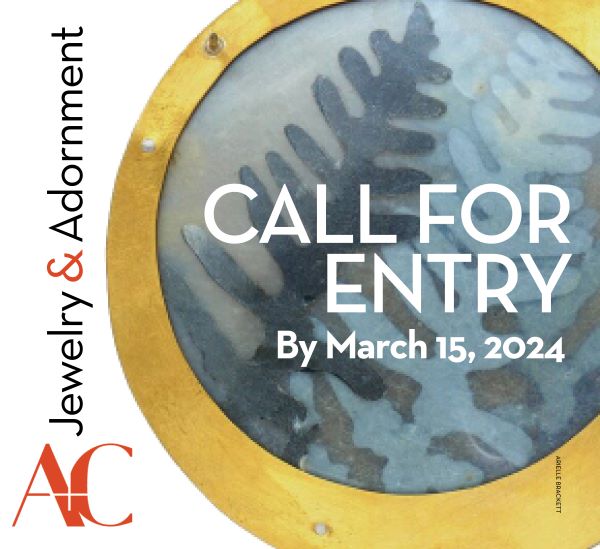
Makers are encouraged to submit examples offering a range of perspectives on this topic. Works that investigate aspects of the human condition, natural phenomena, and pattern disruptions, for example, merely are suggestions for a subject that has many points of entry. The subject of imperfection is a core tenet of the Society of Arts and Crafts, Boston, which was founded in 1897 to support hand craftsmanship in a rapidly industrializing world.
*Note to artists/makers: Please do not be discouraged if your ideal materials/methods/mediums are not listed here. Our interpretation of jewelry is wide-ranging, and adornment can be almost anything that rests or is placed on the body. How you interpret that is up to you. Show us something interesting. We hope you will surprise us.*
Entrants will select up to two (2) categories for consideration:
Metalwork: Includes jewelry made primarily from metals such as gold, silver, copper, brass, and others. Entries may range from traditional metalworking techniques to contemporary approaches.
Mixed Media: Combines different materials in their jewelry creations. This category might include pieces that incorporate metals, polymer clay, gemstones, beads, fibers, wood, or other nature-based or unconventional materials.
Enamelwork: Specifically for jewelry that features the art of enameling.
Upcycled or Recycled Materials: The focus is on sustainable jewelry made from recycled or upcycled materials. This category promotes eco-friendly practices and creativity in repurposing materials.
Cultural/Traditional: Celebrate jewelry that draws inspiration from specific cultures or traditions. This category may include pieces that reflect the artist’s heritage or explore cultural themes.
*Selected pieces will be shown in the SA+C online gallery. All selected artists will be featured on SA+C social media, on the website, and in our eNewsletter (sent to 10,000+ recipients). One artist will be awarded a $1,000 grant to inspire their continued work. Plans for an in-person exhibition will be announced at a later date. Work should have been made within the last five (5) years.